

Overview
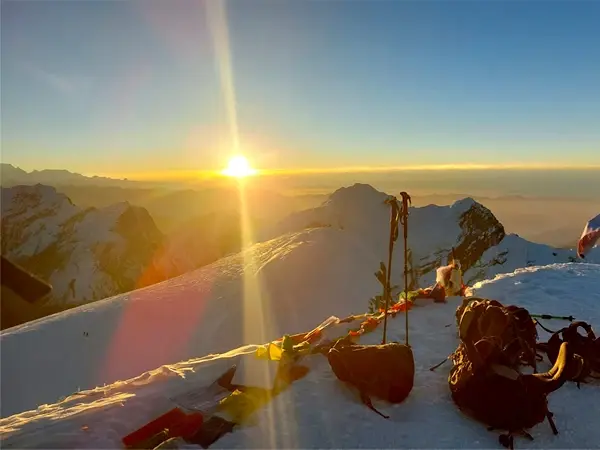
Mera Peak Climbing is an exciting Himalayan adventure that takes you to the summit of Mera Peak at 6,476 meters. It is one of Nepal’s most popular trekking peaks and offers a perfect combination of trekking and mountaineering. The journey takes you through the remote Hinku Valley, beautiful forests, traditional Sherpa villages, alpine landscapes, glaciers, and high mountain camps.
The adventure begins with a scenic flight to Lukla, followed by a trek through the peaceful trails of the Hinku Valley. The route passes through places such as Paiya, Panggom, Ningsow, Chhetra Khola, Kothe, Thangnak and Khare. As you gain altitude, the landscape changes from green forests to rugged Himalayan terrain, offering beautiful views and a true wilderness experience.
Before attempting the summit, you spend time acclimatizing at higher elevations and receive practical climbing training from an experienced guide. You learn how to use essential climbing equipment such as crampons, an ice axe, harness and ropes. The training helps you become familiar with glacier travel and prepares you for the challenging conditions above Khare and Mera High Camp.
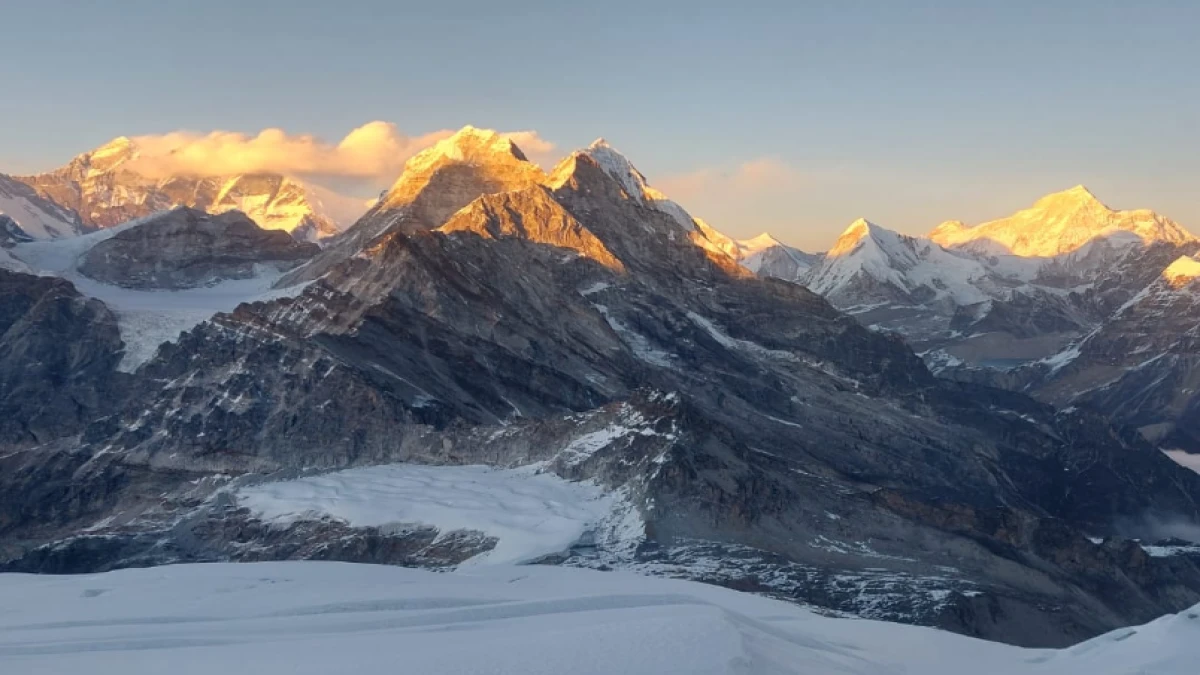
The summit day is the main highlight of the expedition. You start early in the morning and climb through snowy and glacial terrain toward the summit of Mera Peak. From the top, you can enjoy breathtaking views of Mount Everest, Lhotse, Makalu, Cho Oyu, Kanchenjunga, Baruntse and many other Himalayan peaks. After reaching the summit, you descend carefully to a lower camp and continue back through the Hinku Valley.
Mera Peak Climbing is physically demanding because of the high altitude, cold weather, long walking hours and changing mountain conditions. However, with proper preparation, gradual acclimatization, good physical fitness and an experienced climbing team, it offers a rewarding Himalayan experience. The best seasons for the climb are generally spring (March to May) and autumn (September to November), when weather and mountain visibility are usually more favorable.
Difficulty
Mera Peak is a challenging high-altitude climb. The main challenges come from the altitude, cold weather, glacier terrain, long walking hours and early morning summit attempt. Previous mountaineering experience is helpful, but proper physical preparation and professional climbing guidance are essential.
Best Time to Climb
Spring – March to May
Spring offers favorable trekking conditions, clear mountain views and beautiful rhododendron forests.
Autumn – September to November
Autumn is one of the best seasons for Mera Peak Climbing because the weather is generally stable and mountain visibility is excellent.
Winter – December to February
Winter brings colder temperatures and more snow. The climb becomes more challenging and requires proper winter mountaineering preparation.
Monsoon – June to August
Monsoon brings rainfall to lower elevations and can affect trails and flights. It is generally not the preferred season for this climb.
Trip Facts
Trip Highlights
Summit Mera Peak at 6,476 meters
Scenic flight to Lukla
Trek through the remote Hinku Valley
Explore traditional Sherpa villages
Walk through rhododendron, pine and bamboo forests
Experience high-altitude Himalayan landscapes
Acclimatization at Thangnak and Khare
Professional climbing and glacier training
Practice with crampons, ice axe, harness and ropes
Cross glacial terrain
Overnight at Mera High Camp
Early morning summit attempt
Panoramic views of the Himalayan peaks
Reserve day for weather and climbing conditions
Reserve day for weather and climbing conditions
Mera Peak Climbing Detailed Itinerary
Arrive at Tribhuvan International Airport in Kathmandu. Our representative welcomes you and transfers you to your hotel. Take time to rest after your journey. Later, meet your climbing guide and receive a briefing about the Mera Peak climbing program.
Explore some of Kathmandu’s cultural and historical attractions. Later, prepare your trekking and climbing equipment with your guide. Your guide checks your essential gear and explains the equipment required for the climb.
Take an early morning flight to Lukla. After meeting the trekking crew, begin your trek toward Paiya. The trail passes through forests, small settlements and mountain landscapes. Continue toward Paiya for your overnight stay.
Start the trek through beautiful forest trails. Cross small streams and walk through rhododendron and bamboo forests. Continue toward Kari La before descending and ascending through the remote landscape to reach Panggom.
Continue through the remote Hinku region. The trail has several uphill and downhill sections. Enjoy the surrounding hills and peaceful mountain scenery before reaching Ningsow.
Walk through dense forests and quiet mountain trails. The route includes several ascents and descents before reaching Chhetra Khola. Rest and prepare for the next stage of the trek.
Continue toward Kothe along the Hinku Valley. Walk beside the Hinku River and enjoy the changing mountain scenery. As you gain altitude, the landscape becomes more alpine.
Follow the Hinku River toward Thangnak. The trail gradually climbs through the valley and offers impressive views of the surrounding mountains. Reach Thangnak and rest for the night.
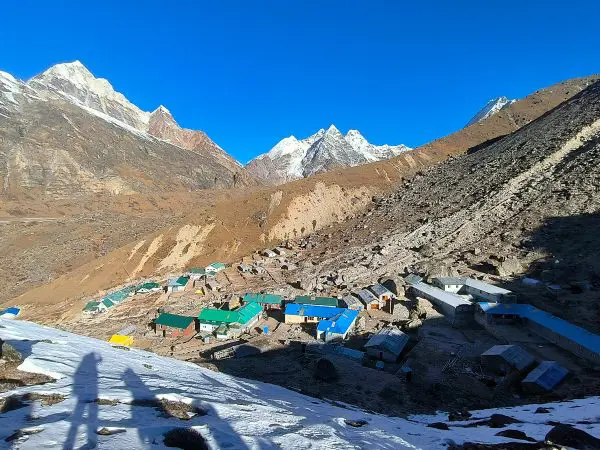
Continue toward Khare through rugged Himalayan terrain. As you approach Khare, views of Mera Peak and surrounding glaciers become more impressive. Khare is the main preparation point for the summit climb.
Spend the day acclimatizing at Khare. Your climbing guide provides practical training on crampons, ice axe, harness, ropes and glacier travel. Practice basic climbing techniques and prepare your equipment for the summit attempt.
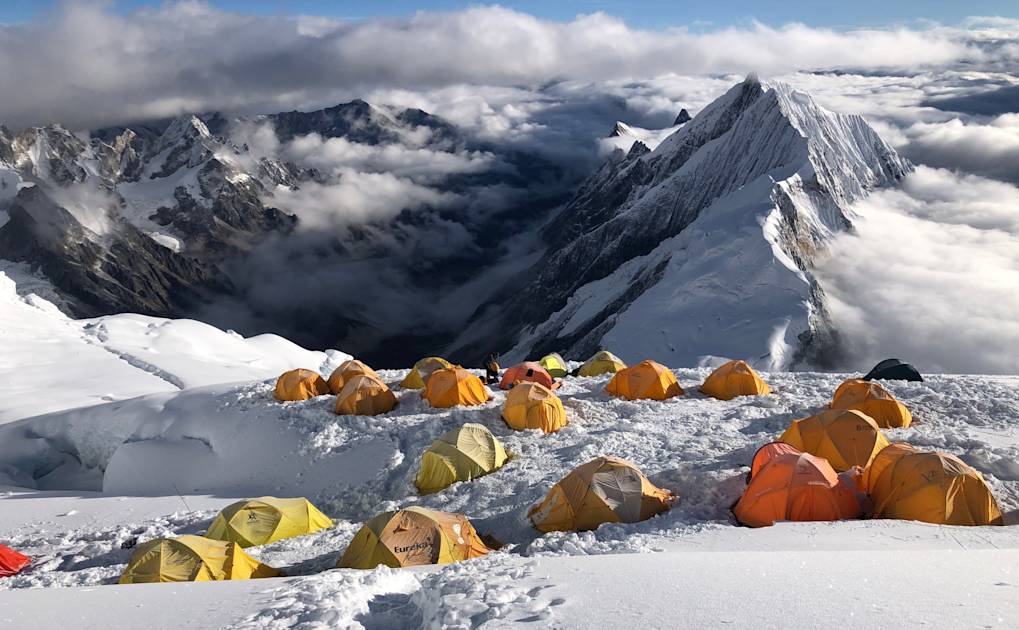
Begin the climb toward Mera High Camp. The trail enters glacial and snowy terrain. Move carefully with the climbing team and follow your guide’s instructions. After reaching High Camp, prepare your equipment and rest for the early summit attempt.
Start the summit climb very early in the morning. Follow the glacier route toward the summit with your climbing guide. Reach the summit of Mera Peak and enjoy spectacular views of the surrounding Himalayan peaks. After spending some time at the summit, begin the descent toward Khare.
This day is kept as a reserve for unfavorable weather, strong winds, poor visibility or other unexpected climbing conditions. If the summit is completed successfully on Day 12, use this day for additional rest or recovery.
Begin the descent through the Hinku Valley. The lower altitude makes the walk more comfortable. Follow the valley trail and return to Kothe.
Continue through forests and mountain trails toward Thuli Kharka. Enjoy the beautiful surroundings as you gradually make your way back toward the Lukla region.
Cross Zatrwa La Pass and descend toward Lukla. This is a long trekking day, but reaching Lukla marks the completion of the main trekking and climbing section.
Take a flight from Lukla to Kathmandu, subject to weather and flight conditions. Transfer to your hotel and enjoy your final evening in Kathmandu.
Our representative transfers you to Tribhuvan International Airport for your onward flight. Your Mera Peak Climbing adventure comes to an end with unforgettable memories of the Himalayas.
Not satisfied with this Itinerary?
Are you interested on planning custom trip? It only takes 2 minutes.Cost Details
Cost Includes
Airport arrival and departure transfers
Hotel accommodation in Kathmandu
Teahouse/lodge accommodation during trekking
Camping accommodation where required
Breakfast, lunch and dinner during trekking and climbing
Domestic flights to and from Lukla
Experienced climbing guide
Assistant guide where required
Porters
Climbing crew
Climbing crew
Required trekking and conservation permits
Guide and porter food and accommodation
Guide and porter insurance
Required group climbing equipment
First-aid kit
Government taxes
Company service charges
Welcome and farewell arrangements
Cost Excludes
International airfare
Nepal visa fee
Travel and rescue insurance
Emergency helicopter evacuation
Personal climbing equipment
Personal clothing and trekking gear
Lunch and dinner in Kathmandu
Extra hotel nights
Extra accommodation due to delays
Personal expenses
Wi-Fi and telephone charges
Bottled water
Alcoholic beverages
Tips for guides, porters and climbing staff
Expenses caused by bad weather or natural disasters
Flight cancellation or delay expenses
Any services not mentioned in the included section
Equipment
Here is a list of what you might want to pack for the hike. Please take this as a starting point. You’ll need layers of warmer clothing during the winter. We provide a 75 liter duffel bag for you to use for the trek. It will be given to you during your pre-trip meeting in Kathmandu. The duffle bag is yours to keep. Also, you can rent sleeping bag and down jacket with us at the additional fee of USD 35 for each once you are in Kathmandu.
All the ground transportation as per itinerary.
Welcome or fare well dinner in kathmandu.
Standard Hotel in Kathmandu and Pokhara with breakfast.
First aid medical kit, Ox meter to check pulse, heart rate and oxygen saturation at higher altitude.
All the ground transportation as per itinerary.
Welcome or fare well dinner in kathmandu.
Standard Hotel in Kathmandu and Pokhara with breakfast.
Reviews
Enter a recent customer’s contact info and we’ll ask them to leave you a review.
What they say!


-
Head Office

-
Tamang Eco Treks
Tarkeshwor, Kathmandu - Call/Whatsapp: 9841903545
- Email: info@tamangecotreks.com
-
Tamang Eco Treks
-
Jarman

-
Spain

- Pedro Gilthoniel
- Email: Email-pedrogilthoniel@yaoo.es
-
France

We’re associated with


